BYD to Prove Ultra-Fast Charging with 2,700-Mile Song EV Road Trip
BYD has announced it will drive its new Song Ultra EV across China's longest expressway—a grueling 2,700-mile (4,395 km) journey—to demonstrate the vehicle's groundbreaking 5-minute Flash Charging technology and next-generation Blade Battery. The company claims this will be the first time any electric vehicle completes the entire route without traditional charging limitations.
"This isn't just a marketing stunt; it's a stress test under real-world conditions," said a BYD spokesperson. "We want to show that range anxiety is a thing of the past." The trip is expected to begin next week and will cover extreme terrain and climate variations.
Background
BYD's Blade Battery already set safety standards by resisting thermal runaway. The new iteration integrates Flash Charging, which can add over 250 miles of range in just five minutes—rivaling gasoline refueling speeds.
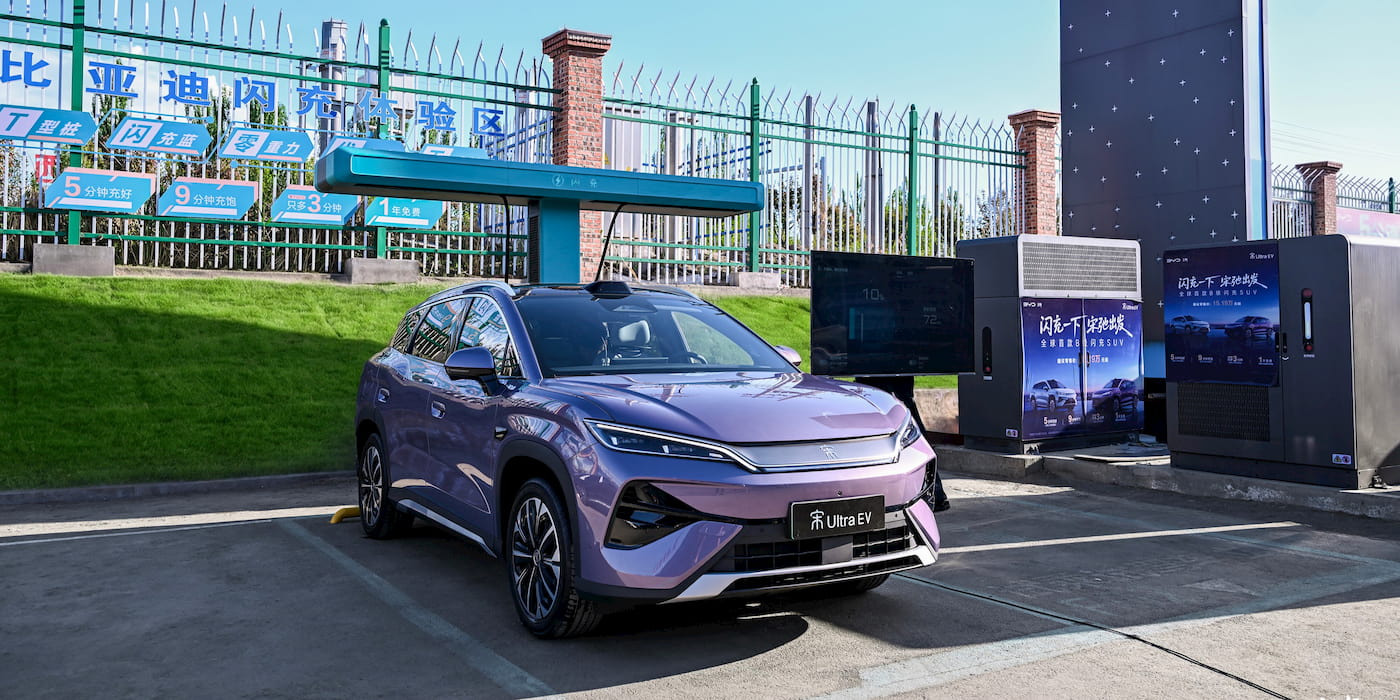
Previous electric vehicles required 30 minutes or more at fast chargers. BYD claims its system uses a unique cell-to-pack design and high-voltage architecture to achieve this breakthrough.
What This Means
If successful, the 2,700-mile drive could accelerate EV adoption by eliminating the single biggest obstacle: charging downtime. "This would be a paradigm shift," said Dr. Lin Wei, an automotive analyst. "Consumers will no longer see EVs as inconvenient."
The test also paves the way for long-distance electric trucking and commercial fleets. However, infrastructure must catch up—ultra-fast chargers remain rare even in China.
The Song Ultra EV
The Song Ultra is BYD's mid-size SUV flagship, priced competitively. It features an all-wheel-drive system and a range of over 600 miles (965 km) on a single charge, according to the company's preliminary data.
- Battery: New-generation Blade Battery with Flash Charging support
- Charging time: 0-80% in 5 minutes (claimed)
- Route: G4 Expressway from Beijing to Shenzhen, plus return leg
Blade Battery Technology
The Blade Battery uses lithium iron phosphate (LFP) cells arranged in a blade shape for better heat dissipation and structural rigidity. BYD has sold millions of such batteries with zero fire incidents.

With Flash Charging, the battery can accept higher current without overheating, thanks to a new electrolyte and anode design.
Expert Reactions
"This is a bold claim," noted Professor Zhang Ming of Tsinghua University. "But if BYD can prove it under public scrutiny, the entire industry will have to follow."
Skeptics point out that 5-minute charging requires chargers delivering 400 kW or more—far beyond current standards. BYD says it will use its own proprietary 1000-volt charging stations along the route.
Road Test Details
BYD will livestream the journey with regular battery temperature, charging time, and range data. Independent inspectors will verify results.
"We encourage competitors to replicate our test," the spokesperson added. "The EV revolution needs transparency."
The trip is expected to take four days, with multiple charging stops every 200-300 miles. BYD anticipates completing it within tight time windows to prove reliability.
Follow the journey via updates on our Blade Battery section.
Related Articles
- From Sea of Nodes to Control-Flow Graph: The Evolution of V8's Optimizing Compiler
- EU Considers Fossil Fuel Exemptions Amid Surge in Renewable Energy Investment
- Your Step-by-Step Guide to Embracing the Denza Z: BYD’s 1,000+ HP Electric Hypercar Coming to Europe
- CIDER Development: Strategic Depth Through Navigation and Audio
- Dart and Flutter's AI Strategy: 5 Key Insights for 2026
- The Ultimate Guide to Owning and Riding the Macfox X7: A Street-Legal Electric Moped
- Tank Pad Ultra: A Rugged Tablet with a Built-in 1080p Projector – Everything You Need to Know
- Maximize Your Ryobi 40V Mower's Battery Life: A Step-by-Step Guide to Efficient Self-Propel Use