10 Fascinating Facts About Curiosity Rover's Sticky Rock Adventure
In April 2026, NASA's Curiosity rover encountered an unexpected problem while exploring Mars: a rock it drilled wouldn't let go. This seemingly minor event turned into a multi-day engineering challenge and provided unique insights into Martian geology. Here are 10 key things you need to know about this curious incident.
1. The Rock That Wouldn't Let Go
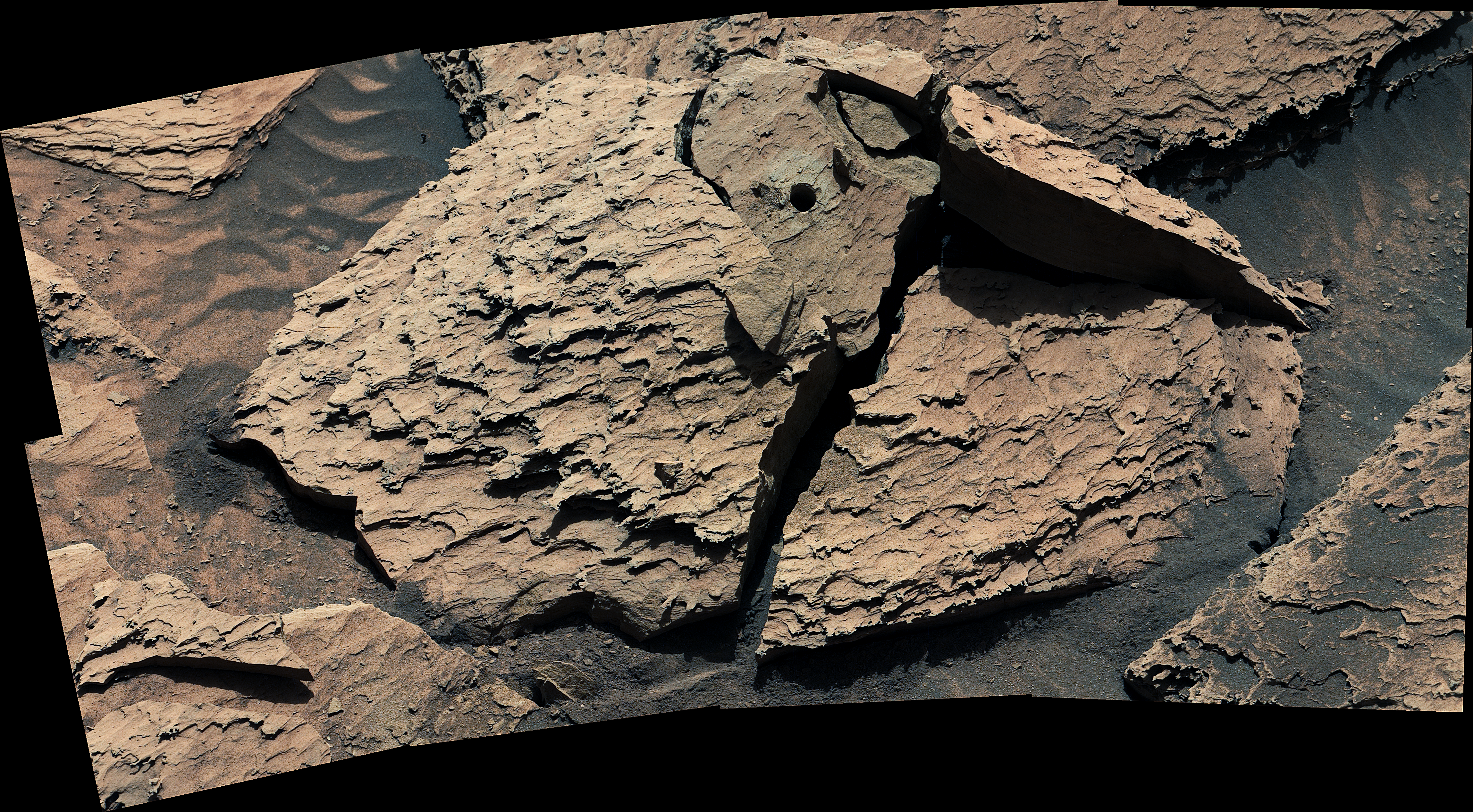
On April 25, 2026, Curiosity drilled a sample from a rock nicknamed “Atacama.” After retracting its robotic arm, engineers realized the entire rock had become stuck to the drill bit. This was no ordinary rock—it clung stubbornly, refusing to separate. Over the next several days, engineers at JPL worked tirelessly to free the rover from its rocky hitchhiker. The situation was tense, as any damage to the drill could jeopardize future sampling. Finally, on May 1, the rock broke into pieces and fell away, allowing Curiosity to continue its mission. This event underscored the unpredictability of Mars exploration and the ingenuity needed to overcome obstacles.
2. Meet Atacama: A Martian Mystery Rock
The rock in question was dubbed “Atacama,” after Chile's Atacama Desert, one of Earth's driest places—a fitting name for a Mars rock. Captured in a close-up by Curiosity's Mastcam on May 6, the rock measures about 1.5 feet (0.46 meters) in diameter at its base and is roughly 6 inches (15 centimeters) thick. Its circular drill hole is clearly visible in images. Atacama's tenacity likely comes from its composition—possibly a type of sedimentary rock with fractures that allowed the drill bit to grip tightly. Understanding such rocks helps scientists reconstruct ancient Martian environments.
3. A Drill That Did Its Job Too Well
Curiosity's percussive drill is designed to pulverize rock samples for analysis. But on Atacama, it worked too effectively. The drill's vibration and rotation caused the rock to adhere to the bit, possibly due to static electricity or mechanical interlocking. This wasn't the first time a sample got stuck—similar issues occurred with the more recent Perseverance rover—but it was rare for the entire rock to be extracted. Engineers had to carefully reposition the arm and use controlled vibrations to shake the rock loose, a delicate operation that took nearly a week.
4. Engineers to the Rescue: Problem-Solving on Mars
When Atacama refused to budge, Curiosity's engineering team on Earth sprang into action. They sent a series of commands to reposition the robotic arm and vibrate the drill at different frequencies. The goal was to dislodge the rock without damaging the drill or the rover. This process required patience—each command took about 20 minutes to reach Mars, and the response time added delays. Engineers used Mastcam images to monitor progress. Their success on May 1 was a testament to years of planning and the resilience of the Curiosity mission.
5. A Sudden Break: The Rock Falls Apart
After days of careful manipulation, Atacama finally detached on May 1, but not gracefully. It broke into pieces, scattering debris near the drill. The sudden fracture surprised engineers, though it was a welcome relief. The pieces were too small to collect, but the event provided valuable data on rock strength and fracturing under Martian conditions. The drill hole itself remained intact in one of the larger fragments, offering a unique cross-section of the rock's interior. This incident taught the team about the limits of drilling and how different rock types respond to stress.
6. Lost and Found: What Happened to the Pieces?
Once Atacama broke apart, some fragments fell under the rover or were scattered nearby. Curiosity's cameras captured the aftermath, but no further sampling from this rock was possible. The pieces are now part of the Martian landscape—a small, artificial rock pile marking human presence. Such events are not uncommon; other rovers have left behind drill tailings or broken samples. For scientists, these fragments are a reminder of the dynamic interactions between tools and terrain on Mars. The data from this episode will inform future sample-collection strategies.
7. A Hole to Remember: The Drill Mark
The circular drill hole in Atacama is about 1.6 centimeters (0.63 inches) in diameter and several millimeters deep—a standard size for Curiosity's sampling system. This hole is visible in the Mastcam image released on May 6. It represents the only human-made feature on this rock. The hole's clean edges suggest the rock was relatively homogenous, though the adhesion issue indicates some property (like high clay content) made it sticky. Studying such holes helps calibrate drilling algorithms for future missions, including Mars Sample Return.
8. Weight and Dimensions: By the Numbers
Atacama is estimated to weigh about 28.6 pounds (13 kg) on Earth, but only about 10.8 pounds (4.9 kg) in Mars' lower gravity. Its dimensions—1.5 feet in diameter and 6 inches thick—make it roughly the size of a large dinner plate. These measurements were calculated from Mastcam images and known drill geometry. The rock's weight relative to its size suggests a density typical of sedimentary rocks on Earth, consistent with Gale Crater's ancient lakebed deposits. Such data helps geologists model the Martian subsurface.
9. What's in a Name? The Origin of “Atacama”
Curiosity's science team often names rocks after locations on Earth, and “Atacama” honors one of the driest deserts on our planet—the Atacama Desert in Chile. This desert is also a Mars analog due to its extreme aridity and similar soil chemistry. By naming the rock Atacama, researchers drew a parallel between Mars' dry landscape and Earth's most Mars-like environment. The name also reflects the rock's potential to hold clues about water history on Mars. Such naming conventions help team members communicate informally and add a human touch to the mission.
10. Why It Matters: Significance for Mars Science
While a stuck rock might seem like a minor nuisance, it has important implications. First, it demonstrated that Curiosity's drill can extract entire rocks, not just powders—opening new ways to study Martian geology. Second, the event provided real-world data on rock grip and drill torque, critical for future drilling attempts. Finally, it highlighted the need for robust trouble-shooting protocols. Every unexpected event on Mars teaches engineers and scientists how to better explore the Red Planet. Atacama's stubbornness will be remembered as a valuable lesson in the annals of Mars exploration.
In conclusion, Curiosity's encounter with Atacama was more than a sticky situation—it was a window into Martian material properties and a showcase of human problem-solving across millions of miles. As the rover continues its journey up Mount Sharp, this episode serves as a reminder that even the most routine tasks can yield surprising discoveries. The story of a pesky rock is, in the end, a story of resilience and curiosity.
Related Articles
- SpaceX Accelerates Record-Breaking IPO to June 12; Eyes $75 Billion Raise
- Mastering Calm During Chaos: A Step-by-Step Guide
- How to Diagnose Multi-Agent System Failures: A Step-by-Step Guide to Automated Failure Attribution
- Unveiling the Hidden Twist: How Water Molecules Organize at the Air–Water Interface
- Artemis II Astronauts Witness First Total Solar Eclipse From Space
- Space and Beyond: The Classic Choose-Your-Own-Adventure Returns as a Stunning Graphic Novel
- A Step-by-Step Guide to Demystifying Particle Physics Fields
- 10 Fascinating Facts About the Donut-Shaped Parachute Bound for Mars