Conversational Ads Management: How to Build a Natural Language Interface for Spotify's Ads API Using Claude Code Plugins
Introduction
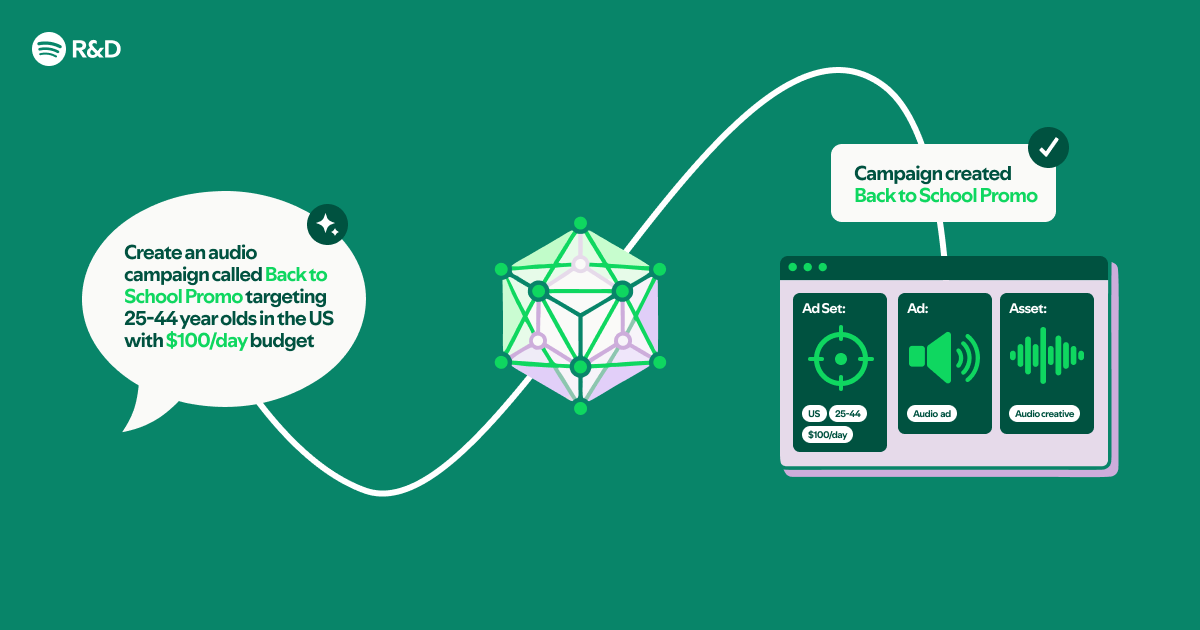
Managing advertising campaigns across multiple platforms often requires specialized knowledge of APIs and complex query languages. However, recent advances in large language models (LLMs) and plugin architectures enable developers to create natural language interfaces that simplify these workflows. In this article, we explore how to build a conversational tool that interacts with the Spotify Ads API using Claude Code Plugins—no compiled code required. By leveraging OpenAPI specifications and Markdown documentation, teams can quickly prototype a system that lets marketers and ad operators manage campaigns through plain English commands.
What Are Claude Code Plugins?
Claude Code Plugins extend the capabilities of Anthropic's Claude AI by allowing it to execute code, call external APIs, and read local files. This means developers can hand Claude a set of instructions (like an OpenAPI spec) and a code file, and the AI can interact with the described service without manual compilation. The plugin architecture runs securely in a sandboxed environment, making it ideal for rapid prototyping of tools that bridge natural language and programmatic interfaces.
For a deeper dive into plugin configuration, see our guide on setting up Claude Code Plugins.
Key Ingredients: OpenAPI Spec and Markdown
The two main assets powering this natural language interface are the OpenAPI Specification (formerly Swagger) and Markdown files. The OpenAPI spec describes every endpoint, parameter, and response of the Spotify Ads API in a machine-readable format. Markdown files add the human-friendly descriptions and usage examples that many official API documentations contain.
By feeding these files directly into Claude via a plugin, the AI gains both the formal schema and the contextual guidance needed to:
- Understand the available operations (e.g., creating campaigns, fetching analytics).
- Map natural language requests to appropriate API calls.
- Generate valid request payloads without manual reference to documentation.
Building the Conversational Ads Management Tool
The process involves three steps:
- Prepare the assets. Download the OpenAPI YAML/JSON file for the Spotify Ads API and any supporting Markdown docs. Place them in a directory accessible to the plugin.
- Write a plugin script. Create a short script (e.g., in Python) that reads the OpenAPI spec and Markdown files, then exposes them to Claude. The script can also include helper functions to authenticate and call the real API.
- Invoke Claude. Run the plugin with a natural language prompt like: "Show me the performance of my top campaign last week." Claude parses the request, consults the spec, and outputs a JSON payload or even directly triggers the API call through the plugin.
No compiled code is required—the entire tool is built from plain text files and an interpreted script. This approach dramatically reduces the development cycle from weeks to hours.

Example Conversation
User: "Pause all campaigns that have a budget under $50."
Claude: Calls the GET /campaigns endpoint to list campaigns, filters by budget, then calls PATCH /campaigns/{id} to pause each one. The plugin handles authentication and rate limiting transparently.
Benefits Over Traditional Approaches
- No compilation or build steps. Developers can iterate instantly without waiting for compile cycles.
- Low barrier to entry. Marketing teams can collaborate by editing Markdown files to add new query patterns.
- Always up‑to‑date. When the API changes, simply update the OpenAPI spec; the plugin adapts automatically.
- Transparency. Every action can be logged and reviewed, since the plugin outputs the intended API calls before execution.
For a technical walkthrough of implementing authentication, see our section on plugin setup best practices.
Challenges and Considerations
While powerful, this method has caveats. The AI may misinterpret complex queries, especially those involving negations or multiple conditional filters. It's important to validate API calls before sending them to production. Additionally, the plugin's sandbox must have secure credentials—API keys should be injected via environment variables, not embedded in Markdown files.
Conclusion
Turning an OpenAPI spec and a few Markdown files into a conversational ads management tool is not only possible but surprisingly straightforward with Claude Code Plugins. This pattern democratizes API access, allowing non-developers to leverage the Spotify Ads API through simple natural language. As LLM plugin ecosystems mature, we expect similar interfaces to become standard for many B2B SaaS products.
Related Articles
- How to Use GDB's Source-Tracking Breakpoints to Avoid Manual Resets
- Step-by-Step Guide to Upgrading Your PC with Corsair iCUE Link QX120 RGB Fans
- Redefining Legacy Modernization in the Age of Agentic Programming: Insights from a Developer Retreat
- The Future of Kotlin Destructuring: From Positions to Names
- WWDC 2026: Apple’s ‘Coming Bright Up’ Invites Signal a Landmark Developer Conference
- Go 1.26 Introduces Source-Level Inlining to Automate API Migrations
- Go 1.26 Released: Major Language Upgrades and Performance Gains Unveiled
- Securing Your Autonomous AI Agent: A Practical Guide to Safely Deploying Tools Like OpenClaw