Ancient Tree Rings Reveal Catastrophic 'Red Sky' Solar Storm That Struck Earth 800 Years Ago
In a groundbreaking discovery, scientists have uncovered evidence of a massive solar storm that slammed into Earth around 1200 CE—an event so intense it turned the sky blood-red and left a permanent signature in ancient tree rings.
The findings, published by a team from Nagoya University in Japan, confirm that the Sun unleashed a cataclysmic burst of radiation more than twice as powerful as any modern recorded event. The storm was detected through spikes of radioactive carbon-14 preserved in centuries-old wood, cross-referenced with historical accounts of eerie crimson auroras.
'This was a truly extreme event—a 'red sky' solar storm that would have crippled our technology if it happened today,' said Dr. Fusa Miyake, lead researcher of the study. 'The tree rings act as a time capsule, allowing us to reconstruct solar activity long before instruments existed.'
Background
The team analyzed tree rings from ancient buried wood in Japan and Europe, searching for sharp increases in carbon-14. This isotope is produced when cosmic rays from solar storms interact with Earth's atmosphere and is absorbed by trees during growth.
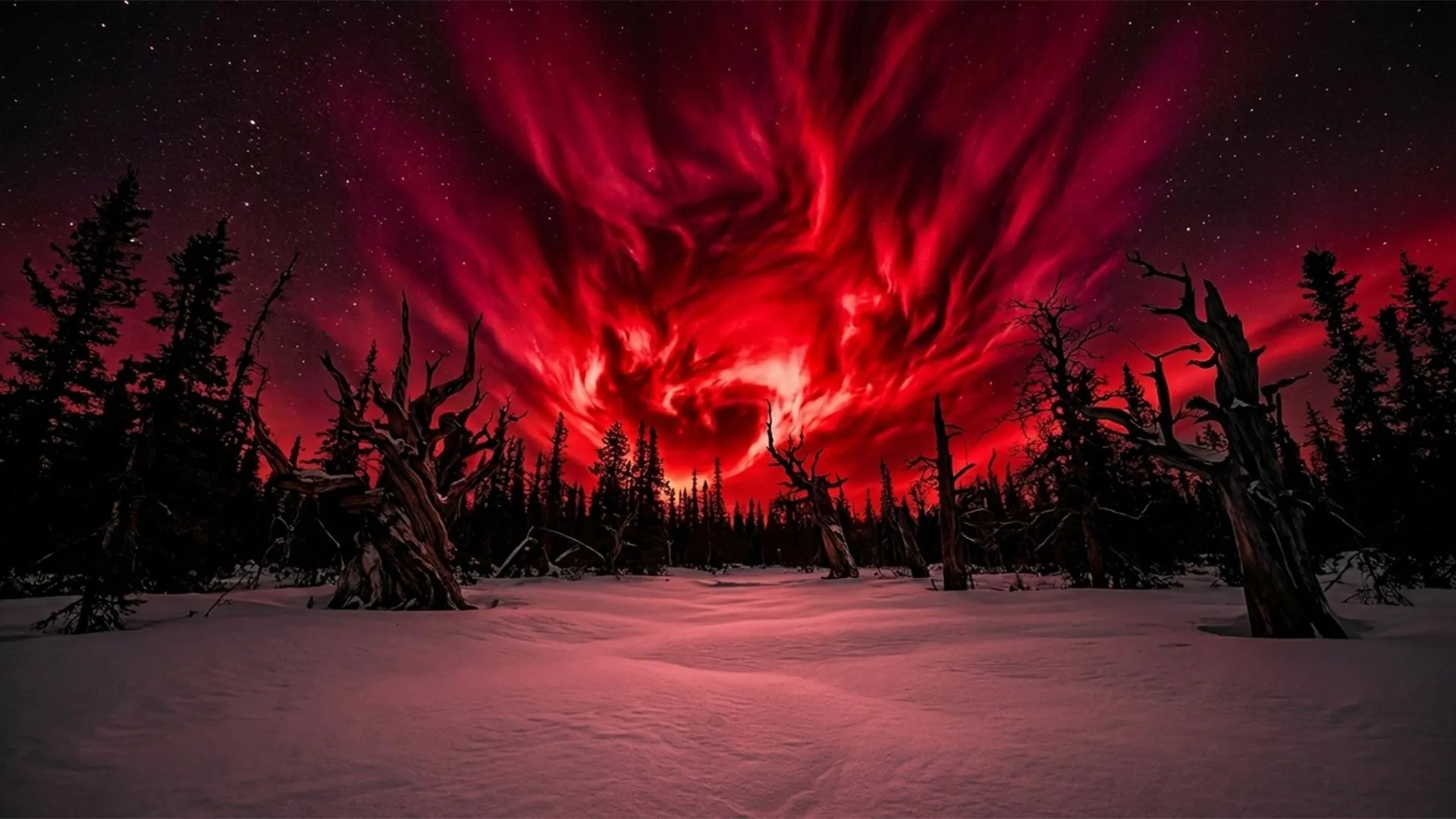
They then matched these spikes with medieval chronicles describing unusually bright and widespread red auroras in East Asia and Europe. The combined data pinpointed the storm to a period between 1190 and 1220 CE, with the most likely date being around 1200.
Earlier research had hinted at a major solar event around that time, but this study provides the first definitive link between tree-ring evidence and historical sky observations. 'The collaboration between physics and history is what made this breakthrough possible,' noted co-author Dr. Hiroko Kato, an expert in medieval astronomy.
What This Means
This event suggests that the Sun was far more volatile during the Middle Ages than previously thought. The solar cycle—the Sun's roughly 11-year rhythm of magnetic activity—appears to have been unusually short, possibly only 8 or 9 years, driving more frequent and powerful storms.
For modern civilization, the implications are stark. A storm of this magnitude today could knock out power grids, disable satellites, and disrupt global communications for weeks or months. 'We are now more vulnerable than ever,' warned Dr. Miyake. 'This discovery is a wake-up call to improve our space weather forecasting and protective infrastructure.'
Understanding these ancient events helps scientists refine models of solar behavior and better predict future extreme storms. The team plans to search for more 'red sky' events in even older tree rings, pushing our knowledge of solar history back millennia.
Related Articles
- How to Unify Your Multi-Site Web Stack Using Dart and Jaspr: A Step-by-Step Migration Guide
- The Great Divide: One Nation Represents Australia’s Top Renewable Regions While Campaigning Against Them
- Why the SECURE Data Act Falls Short as a Consumer Privacy Law
- Your Complete Guide to Lexus’s Upcoming Three-Row Electric SUV
- How to Determine If the 2026 Hyundai IONIQ 5 Is the Right Affordable EV for You
- How to Track the Debut of Toyota's Three‑Row Electric SUV and Its Lexus Counterpart
- 7 Key V8 Optimizations Behind a 2.5x Speedup in JetStream2
- 5 Key Facts About AGL's Giant Battery Project in Coal Country and the Rare Lizard It Must Protect