Recreating and Testing Mary Rose Fire Darts: A Step-by-Step Guide
Introduction
The Mary Rose, a Tudor warship that sank in 1545, was raised in 1982, revealing a treasure trove of artifacts, including massive darts believed to be incendiary weapons. Historians have long debated how these darts were deployed—whether thrown by hand from the crow's nest or fired from a cannon. Recent experiments by Tod's Workshop and collaborators aimed to answer these questions. This guide walks you through the process of recreating and testing these giant fire darts, based on the original research and recovered remnants.
What You Need
- Reference Materials: Detailed diagrams and photos of the original Mary Rose darts (available from the Mary Rose Trust).
- Dart Shaft: A wooden rod approximately 1.5 meters long, based on original dimensions.
- Incendiary Mixture: Historically accurate pitch and sulfur compound (use modern fire safety precautions).
- Cloth Covering: Linen or cotton soaked in pitch to wrap the incendiary payload.
- Wooden Fuses: Thin, slow-burning wooden sticks to delay ignition.
- Launch Mechanism (optional): A replica cannon or compressed air launcher for scaled tests.
- Safety Gear: Fire-resistant gloves, goggles, extinguisher, and a clear safety zone.
- Test Target: A wooden structure simulating a ship's hull (for fire tests).
- High-Speed Camera: To capture dart behavior during launch.
Step-by-Step Instructions
Step 1: Study the Original Artifacts
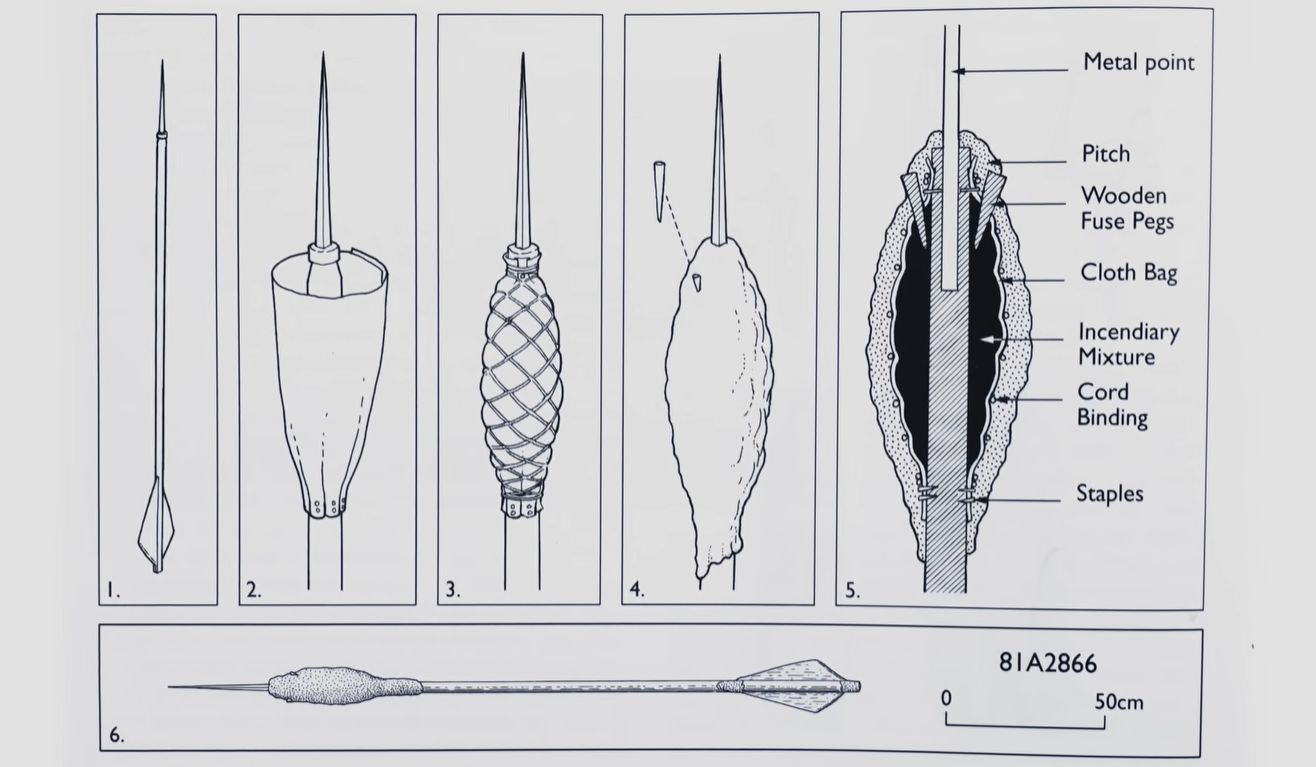
Before recreating, examine the three darts recovered from the Mary Rose. Note their length (approx. 1.5 m), weight, and the condition of the cloth wrapping. The darts were found near a miscast cannon angled upward, suggesting possible cannon launch. Document all details, including the pitch-covered cloth and the remnants of wooden fuses. This research forms the foundation for accurate reproduction.
Step 2: Create a Reproduction Dart
Using the measurements from Step 1, craft a wooden shaft. Attach a pointed iron tip to the front. At the rear, shape the shaft to fit a cannon bore if testing with a launcher. Ensure the shaft is sturdy but not too heavy—original darts were designed to be thrown or launched, not self-propelled.
Step 3: Prepare the Incendiary Mixture and Fuse
Mix pitch with sulfur and other flammable materials (use only under controlled conditions). Soak a cloth in this mixture and wrap it around the dart's midsection. Insert a wooden fuse into the payload; the fuse should burn for a set time (e.g., 10-15 seconds) before igniting the main charge. The fuse's length determines the delay. Test the fuse separately for consistency.
Step 4: Test Hand-Throwing Method
With a non-incendiary practice dart, simulate throwing from an elevated position (e.g., scaffolding representing a crow's nest). Aim for distance and accuracy. The original test showed that a hand-thrown dart could clear the ship's deck safely. Document the trajectory and impact force. Repeat with the incendiary version only after confirming safety.

Step 5: Test Cannon or Compressed Air Launch
Since full-sized black powder cannons are rare, use a scaled-down dart fired from a compressed air launcher. Set the launcher to a low charge (simulating a "soft" cannon load). Observe the dart's acceleration: at full charge, the dart may disintegrate (as seen in Tod's Workshop test). A reduced charge keeps the dart intact for close-range targets (e.g., 50-100 meters). Film with high-speed camera to analyze flight stability.
Step 6: Evaluate Results and Effectiveness
After successful launch, allow the incendiary dart to lodge into a wooden target. The mixture, once ignited by the fuse, will burn intensely and be nearly impossible to extinguish. Note the damage: a salvo of such darts could severely disable an enemy ship. Compare the hand-thrown vs. launched versions: launched darts penetrate deeper, while thrown darts are simpler but shorter-range.
Tips for Success
- Safety first: Always conduct tests in a fire-safe area with extinguishers and a fire watch. Never use full-size incendiary darts on live ships.
- Historical context: The Mary Rose darts were experimental; their effectiveness in battle is uncertain. Scale tests provide insights but cannot fully replicate 16th-century conditions.
- Document everything: Record all steps for educational or historical presentations. Collaborate with museums or reenactment groups for authenticity.
- Modify for accuracy: If your reproduction fails, adjust the fuse length, payload weight, or cloth wrap. The original darts likely underwent similar iterations.
- Consider alternatives: Some historians suggest darts were launched from swivel guns or even crossbows. Test other methods if feasible.
By following these steps, you can recreate the Mary Rose fire dart tests and contribute to our understanding of Tudor naval warfare. Remember: the goal is not just to see if it works, but to uncover how sailors might have used such terrifying weapons.
Related Articles
- New Cyber Espionage Campaign Tied to China Targets Asian Governments and NATO Member
- 6 Critical Lessons from the CPU-Z Watering Hole Attack: How SentinelOne Stopped a Supply Chain Breach
- How to Secure Your Linux System Against the Dirty Frag Exploit
- How to Defend Your Organization Against Ransomware in 2026: A Proactive Guide
- Snowden Leaks: Former NSA Chief Chris Inglis on Mistakes, Insider Threats, and Media Disclosures
- How to Safeguard Your Mac from Terminal Social Engineering: A Guide to macOS Tahoe 26.4’s Paste Protection
- 10 Critical Facts About the Apache HTTP/2 Double Free Flaw (CVE-2026-23918)
- Anthropic’s Mythos AI: Autonomous Hacking Tool Sparks Urgent Cybersecurity Debate