7 Breakthroughs in NASA's Next-Gen Spaceflight Computing
For six decades, NASA has pushed the boundaries of space exploration by advancing onboard computing. From the Apollo Guidance Computers that first landed humans on the Moon to the resilient processors powering Mars rovers, each generation has delivered remarkable feats. Yet as missions grow more ambitious—longer durations, deeper destinations, and greater autonomy—the need for dramatically increased computing power becomes critical. Enter the High-Performance Spaceflight Computing (HPSC) project, a revolutionary system-on-chip developed in partnership with Microchip Technology Inc. This listicle explores seven key breakthroughs that make HPSC a game-changer for the future of spaceflight.
1. From Apollo to Autonomy: The Evolution of Space Processors
Space computing began in the 1960s with the Apollo Guidance Computers, which handled guidance, navigation, and control for NASA's early Moon missions. These radiation-hardened processors became the foundation for decades of exploration, enabling achievements like landing rovers on Mars and operating orbiters around distant planets. However, modern missions demand more: real-time decision-making, high-speed data processing, and resilience in extreme environments. The HPSC project addresses these needs by delivering over 100 times the computing capability of current space processors, ushering in a new era of autonomous spacecraft.
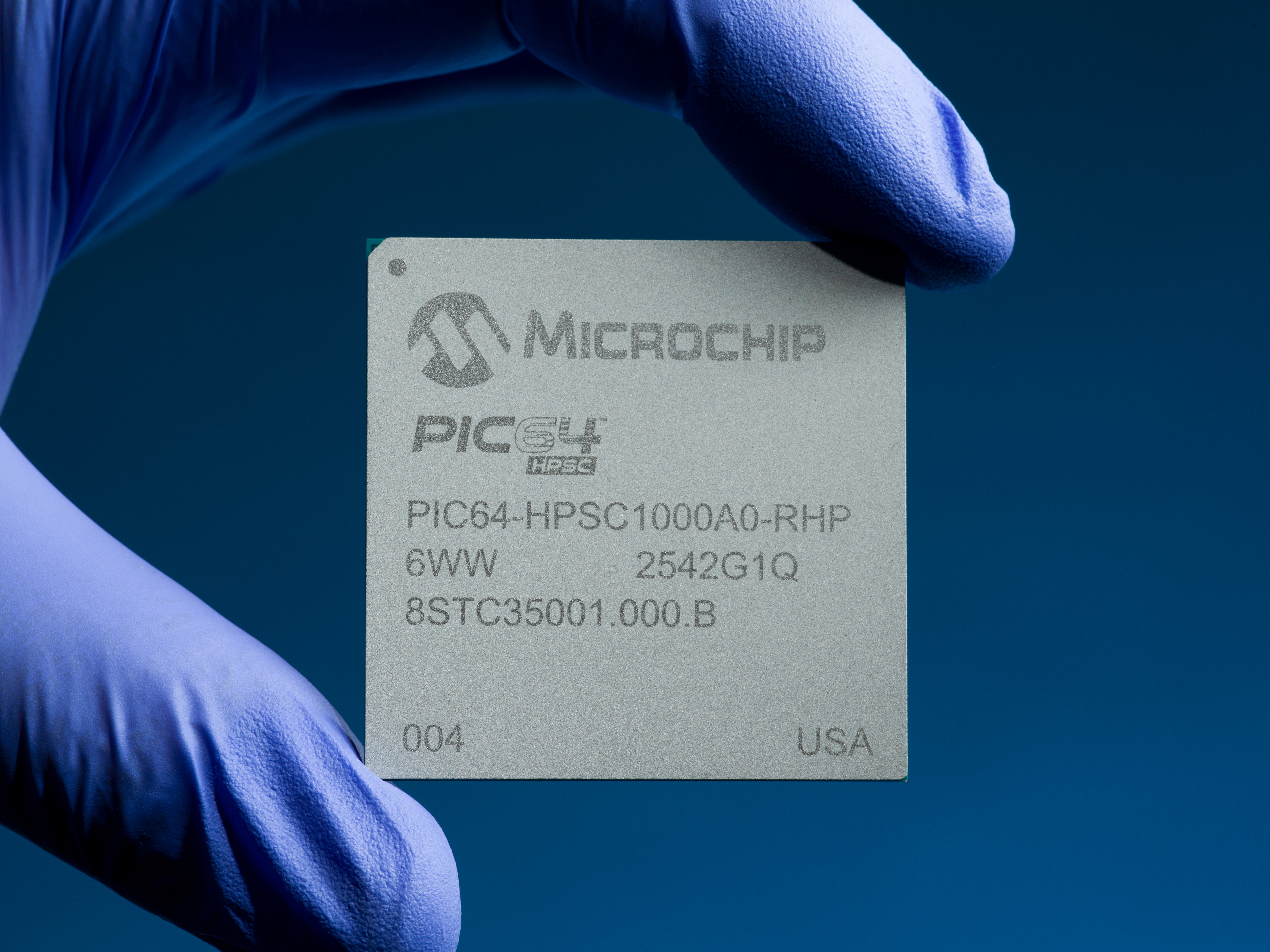
2. A Public-Private Partnership Powered by Microchip
To meet the challenges of next-generation missions, NASA and industry leader Microchip Technology Inc. formed a unique public-private partnership. This collaboration combines NASA's deep expertise in spaceflight systems with Microchip's commercial semiconductor innovations. By pooling investments and sharing risk, the HPSC project accelerates development while reducing costs. The result is a family of processors that benefit both government and commercial space sectors, ensuring that the technology is robust, scalable, and ready for a wide range of applications from low Earth orbit to deep space.
3. 100x Performance Leap in a Single Chip
The HPSC is a next-generation system-on-chip that integrates computing, networking, and security into one compact device. This architecture delivers more than 100 times the computational power of legacy radiation-hardened processors, enabling spacecraft to handle complex tasks like real-time image filtering, autonomous navigation, and high-speed rover driving. By consolidating functions, the chip also significantly reduces system cost and power consumption—a critical advantage when every watt and gram counts in space missions.
4. Scalable Architecture for Any Mission
One size does not fit all in spaceflight. The HPSC family includes multiple compatible processor variants designed for different radiation environments and mission profiles. Unused functions can be dynamically powered down, optimizing energy efficiency precisely for the task at hand. This scalability allows engineers to tailor computing performance to specific needs—whether it's a geosynchronous communications satellite, a deep-space probe heading to Mars, or a long-duration lunar outpost. The flexibility ensures maximum utility across NASA's diverse portfolio of missions.
5. Radiation-Hardened and Radiation-Tolerant Versions
Space is a hostile environment with high radiation levels that can disrupt electronics. HPSC addresses this with two targeted variants. The radiation-hardened version is built for the harshest conditions, such as deep-space journeys to Mars and beyond, where it must operate for years while supporting autonomous tasks. Meanwhile, the radiation-tolerant version is tailored for the booming commercial space sector, providing fault tolerance and cybersecurity for satellites in low Earth orbit. This dual approach ensures both reliability and affordability across different mission classes.
6. Real-Time Decisions with Advanced Ethernet
HPSC leverages advanced Ethernet technology to connect multiple sensors and even cluster several chips for massive parallel processing. This enables spacecraft to process huge amounts of data onboard and make real-time decisions without waiting for ground commands. For example, a Mars rover could analyze terrain and adjust its path at high speeds, or a space telescope could filter science images autonomously. Continuous system health monitoring and an integrated security controller ensure that these complex operations remain safe and reliable, even in the most challenging conditions.
7. Powering the Golden Age of Exploration
As NASA prepares to return humans to the Moon and eventually venture to Mars, computing power will be the backbone of mission success. HPSC is more than just a faster chip—it's a paradigm shift toward highly autonomous, resilient spacecraft that can handle unprecedented complexity. The public-private development effort, anchored by NASA, Microchip, and other partners across the nation, is already setting the stage for the next golden age of exploration. With HPSC, spacecraft will be smarter, more efficient, and ready for the challenges of tomorrow's frontiers.
Conclusion: The High-Performance Spaceflight Computing project represents a monumental leap in spaceborne processing technology. By combining 100x performance gains with scalable, radiation-resilient designs and real-time decision capabilities, HPSC empowers missions that were once science fiction. As NASA and commercial partners deploy these processors in orbit, on lunar surfaces, and beyond, the way we explore the cosmos will be forever transformed. The age of autonomous spaceflight is here—and it's powered by HPSC.
Related Articles
- The Hidden Physics Behind Dolphin Speed: Supercomputer Simulations Reveal Vortex Secrets
- Hidden Blur in Time Reveals Quantum Limit, Physicists Say
- Voyager 1 Powers Down 50-Year-Old Instrument to Conserve Energy in Deep Space
- Precision Breakthrough: Scientists Pin Down Gravity's Elusive Strength with Unprecedented Accuracy
- Keto Diet Shows Promise as Breakthrough Treatment for Mental Health Disorders
- The Great Teacher Exodus: What’s Driving Educators Away?
- The Hidden Hurdle in Zero Trust: Securing Data in Motion
- Psyche Spacecraft Captures Breathtaking Crescent Mars Image on Course for Asteroid Mission