How to Migrate from a Forked WebRTC Library to an Upstream-Based Architecture
Introduction
Real-time communication (RTC) libraries like WebRTC are critical for audio and video across platforms. However, forking the open-source project—while initially convenient for custom optimizations—often leads to a "forking trap": the internal fork drifts from upstream, cutting off community updates and making future upgrades costly. Meta faced this challenge across 50+ use cases (Messenger, Instagram, Cloud Gaming, VR casting). Their solution: a modular architecture that treats upstream WebRTC as a skeleton and injects proprietary components, enabling A/B testing and continuous upgrades. This guide distills their process into actionable steps for any engineering team.
What You Need
- A monorepo setup (or similar build system) for managing code and dependencies.
- C++17 (or later) compiler and linker that supports ODR (One Definition Rule) workarounds.
- Deep knowledge of WebRTC internals (peer connection, media engine, transport layers).
- Experience with static linking and symbol handling in large codebases.
- A/B testing infrastructure (feature flags, user segmentation, telemetry).
- Continuous integration (CI) pipeline for automated testing and rollout.
Step-by-Step Guide
Step 1: Audit Your Current Fork and Use Cases
Begin by cataloging every product or service relying on your WebRTC fork. Document each use case's specific requirements—latency tolerance, device types, codec preferences, etc. At Meta, this revealed over 50 distinct cases from low-latency cloud gaming to high-quality video calls. Identify which modifications are essential (proprietary codecs, security patches) versus those that can be dropped in favor of upstream features. This audit informs the migration priority and helps avoid regressions.
Step 2: Design a Dual-Stack Architecture for A/B Testing
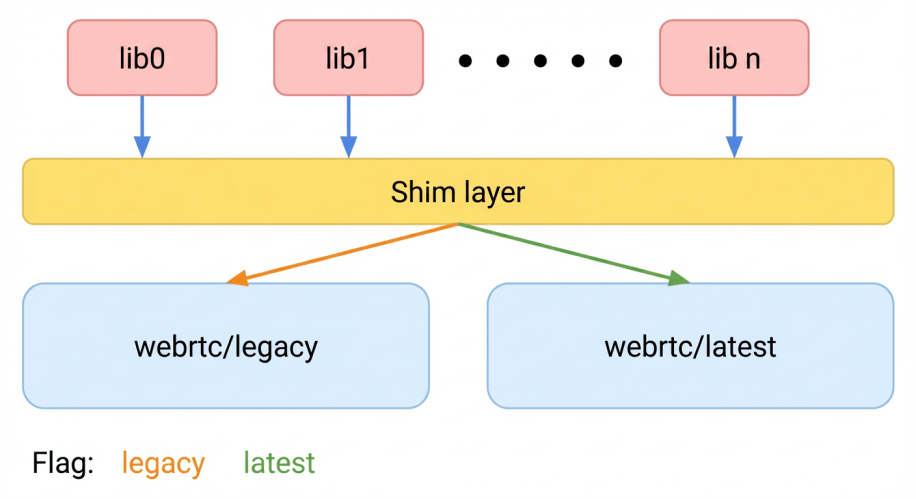
To safely test the new upstream-based version alongside the legacy fork, create a dual-stack within the same application binary. Both versions must be capable of running simultaneously, with dynamic user steering via feature flags. This requires wrapping each version in separate namespaces or using linker-level renaming (e.g., objcopy --redefine-sym) to avoid ODR violations. Meta used a two-library build: one containing the legacy fork, another with the upstream skeleton and proprietary plug-ins. Ensure both can be instantiated and destroyed cleanly without interfering with each other's global state.
Step 3: Extract Proprietary Components as Pluggable Modules
Instead of forking the entire WebRTC code, identify which internal optimizations are truly unique. Common areas include: video codecs, network transport, audio processing, and encryption. Refactor these into standalone libraries that implement WebRTC's abstract interfaces (e.g., VideoEncoderFactory, TransportInterface). This allows you to keep the upstream code as a clean skeleton while injecting your custom logic. Meta’s team used this approach to support proprietary compression and custom pacing algorithms without touching core upstream files.
Step 4: Solve Static Linking Conflicts
Static linking two versions of WebRTC violates the C++ ODR—symbols from both libraries clash. To circumvent this, adopt one of these strategies:
- Namespace isolation: Compile one version with a custom namespace prefix (e.g.,
webrtc_legacy::) using macros or anamespacewrapper header. - Symbol visibility control: Use linker version scripts or
-fvisibility=hiddento hide symbols from one library, then expose only necessary entry points. - Manual symbol remapping: Employ
objcopyto rename conflicting symbols before linking.
Meta combined namespace isolation with careful build graph management in their monorepo to keep each version’s global state separate. Validate the final binary for symbol collisions using tools like nm or ldd.
Step 5: Build a Continuous Upgrade Pipeline with A/B Testing
With the dual-stack in place, automate the ingestion of each upstream release. For every new WebRTC version:
- Merge cleanly into the skeleton (ignoring proprietary modules).
- Apply your modular components via conditional compilation or dynamic linking.
- Build two versions: legacy and new-upstream.
- Run automated integration tests for all 50+ use cases in a staging environment.
- Roll out to a small percentage of users via A/B testing, measuring key metrics (latency, packet loss, CPU usage, binary size).
- If regressions appear, disable the new version and fix; otherwise, gradually ramp up to 100%.
Meta currently uses this pipeline to test each upstream release before full deployment, ensuring no breaking changes reach billions of users.
Step 6: Incrementally Migrate Use Cases
Don’t attempt a one-time switch. Instead, move one product or feature at a time. For each use case:
- Verify its compatibility with the new upstream-based stack.
- Switch its feature flag to the new version for a small user segment.
- Monitor telemetry for regressions—roll back if necessary.
- Once stable, revert the legacy fork for that use case and remove its support code.
This incremental approach reduces risk and builds confidence. Meta migrated all 50+ use cases over several years, each validated independently.
Tips for Success
- Invest in automation early: Manual A/B testing at scale is infeasible. Build CI/CD that automatically runs performance benchmarks and user simulations.
- Watch binary size: Dual-stack can double the library footprint. Use dead code elimination and modular linking to keep size manageable. Meta optimized by compiling only necessary components.
- Security first: Outdated forks miss upstream security patches. Prioritize upgrading to fix vulnerabilities—your A/B testing process should include security scans.
- Document symbol isolation details: ODR workarounds are fragile. Maintain clear documentation and code comments for future maintainers.
- Communicate with stakeholders: Product teams may resist migration due to perceived risk. Share early A/B test results showing improved performance or reduced crashes to gain buy-in.
Related Articles
- Drasi Turns AI Into Automated Documentation Tester After Docker Update Breaks All Tutorials
- Meta Breaks Free from WebRTC Fork: Dual-Stack Architecture Powers 50+ Use Cases
- 8 Key Highlights of Flutter 3.41: What Every Developer Should Know
- Git 2.54 Debuts 'git history' Command – A Simplified Approach to Rewriting Commits
- Rust Project Expands Mentorship Programs, Joins Outreachy for May 2026 Cohort
- 10 Essential Facts About the Sovereign Tech Agency’s Paid Standards Program for Open Source Maintainers
- Behind the Lens: 7 Key Insights Into Open Source Documentaries
- GitHub's Reliability Journey: Navigating Rapid Growth and System Complexity