Hugging Face Opens Robot App Store: Reachy Mini Now Runs Over 200 Community-Built Applications
The world of robotics has long been the domain of engineers and coders, but that's changing. Hugging Face, the leading open-source AI platform, has launched an App Store for its Reachy Mini robot, bringing app-like functionality to a physical desktop robot. With over 200 free applications already available and a simple way for anyone to create new ones, the store marks a major step toward making robots as accessible as smartphones. Here's what you need to know.
What is the Reachy Mini App Store and who launched it?
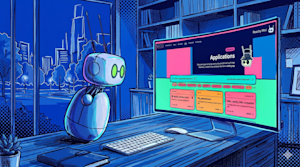
The Reachy Mini App Store is a new platform from Hugging Face, the New York City-based startup famous for hosting open-source AI models. It provides a library of over 200 community-built applications for the Reachy Mini robot—a small, stationary desktop robot that costs $299 and was first released in July 2025. The robot itself came from Hugging Face's acquisition of Pollen Robotics. The app store allows owners to download and install these apps free of charge, a deliberate choice to encourage adoption. While there's no monetization for creators yet, Hugging Face plans to keep the store open and community-driven. The store also integrates with Hugging Face's AI agent "ML Intern", which helps users build custom apps without coding knowledge. This launch positions Reachy Mini as a platform akin to a smartphone, but for physical robotics.
How is the Reachy Mini App Store different from smartphone app stores?
Unlike smartphone app stores such as Apple's App Store or Google Play, the Reachy Mini App Store is entirely free—there are no purchases or in-app payments, and developers cannot monetize their creations (at least for now). Another major difference is the hardware focus: smartphone apps run on a general-purpose mobile device, while Reachy Mini apps control a physical robot with motors, sensors, a speaker, and a microphone. The store also emphasizes open-source principles; all apps are community-built and shareable. Additionally, the process of building an app is radically simplified: users describe what they want in plain English, and Hugging Face's AI agent writes the code, tests it, and deploys it. This removes the need for software development kits (SDKs) or robotics expertise, whereas smartphone app development typically requires learning Swift, Kotlin, or other programming languages.
Can non-programmers really create apps for Reachy Mini?
Yes, absolutely. The key innovation is Hugging Face's agentic toolkit that acts as a translator between human language and robot code. To create an app, a user simply types a command in plain English—for example, "wave when someone says good morning". The AI agent then handles everything: it writes the underlying code, tests it against the robot's firmware and physical constraints, and packages it for deployment. This process, according to Hugging Face CEO Clément Delangue, allows anyone—even people with no engineering or coding background—to ship functional robotics software in under an hour. The barrier of being a "roboticist" is eliminated. The store also includes a growing library of 200+ existing apps that users can install immediately, plus the ability to customize and remix them. This democratization of robot programming is unprecedented in the field.
Why has robotics software development been so difficult until now?
The primary bottleneck has been the scarcity of high-quality training data specific to robotics. While large language models (LLMs) like GPT-4 have learned to code by training on massive datasets such as GitHub, the volume of robotics-specific code is minuscule in comparison. Although GitHub hosts over 17,000 repositories related to robotics—likely the largest public collection—this pales next to general code repositories that number in the millions. This data deficit meant AI agents were historically poor at understanding the physical abstractions, firmware requirements, and real-world constraints of hardware. As a result, building robotics software required deep knowledge of specific SDKs, motor controllers, sensor APIs, and debugging physical interactions. Hugging Face's agentic toolkit overcomes this by acting as a middleware layer that translates high-level intent into low-level robot commands, effectively bypassing the need for training on massive robotics datasets.
What hardware does the Reachy Mini include, and how many have been sold?
The Reachy Mini is a stationary desktop robot priced at $299. It features built-in camera eyes, a speaker, a microphone, and movable arms or appendages (depending on the configuration). It is fully open-source, meaning its design files and firmware are publicly available. According to Hugging Face, approximately 10,000 units have been sold since the robot's launch in July 2025. The robot is designed to sit on a desk and interact with its environment—for example, recognizing faces, responding to voice commands, or performing simple physical gestures. Its low cost and open nature make it ideal for hobbyists, educators, and AI researchers. The new app store dramatically expands what the robot can do, turning it into a versatile platform for experimentation with embodied AI.
What is the significance of this launch for the robotics industry?
This launch marks a pivotal moment in making robotics as accessible as PCs and smartphones to laypeople. By removing the need for specialized engineering skills, Hugging Face has opened the door for anyone with an idea to create and share robot behaviors. CEO Clément Delangue noted that more AI model builders may choose Reachy Mini as a testbed for evaluating their models' robotics capabilities. The app store also accelerates the democratization of embodied AI, where AI models interact with the physical world. Historically, progress in robotics was limited by the complexity of programming hardware. Now, with a natural-language interface and a community app repository, the gap between software AI and physical action is shrinking rapidly. This could lead to a explosion of novel use cases—from educational tools to assistive devices—and inspire a new generation of robot developers who never had to write a line of code.
What does the future hold for the Reachy Mini platform?
Hugging Face has hinted at several future directions. One priority is expanding the app store with more sophisticated AI models that can control Reachy Mini's movements and sensors. The store currently has no monetization for developers, but that may change as the ecosystem grows, potentially introducing paid apps or subscriptions. Another possibility is integration with Hugging Face's broader AI ecosystem, allowing Reachy Mini to run state-of-the-art language models or computer vision models directly. The 10,000-unit sales base provides a solid foundation for community growth. As more apps are built and shared, the platform could evolve into a standard reference for open-source robotics. Hugging Face also plans to improve the agentic toolkit to handle more complex tasks, like multiple-step sequences or interactions with external devices. Ultimately, the company envisions a future where building a custom robot app is as easy as downloading a music app on your phone.
Related Articles
- Deepinfra’s $107M Series B: Building a Dedicated Inference Cloud for Open-Source AI
- How to Balance Observability and Human Intuition When Scaling Development with AI
- The Trust-First Playbook: 7 Steps for Founders to Monetize Attention Without Losing Credibility
- The Hidden Risk of AI Automation: Losing the Human Experts Who Train AI
- How to Launch and Nurture a Developer Community That Lasts (Even with AI on the Rise)
- Anthropic's Revenue Soars to $30 Billion Run Rate: 'Crazy' 80x Growth Outpaces Planning
- GridCare Secures $64M to Accelerate AI Data Center Grid Connections, Easing Power Bottlenecks
- 10 Key Insights from Braze’s CTO on Engineering in the Agentic Era